What Is the Best Fundrise Alternative for Real Estate Investors in 2026?

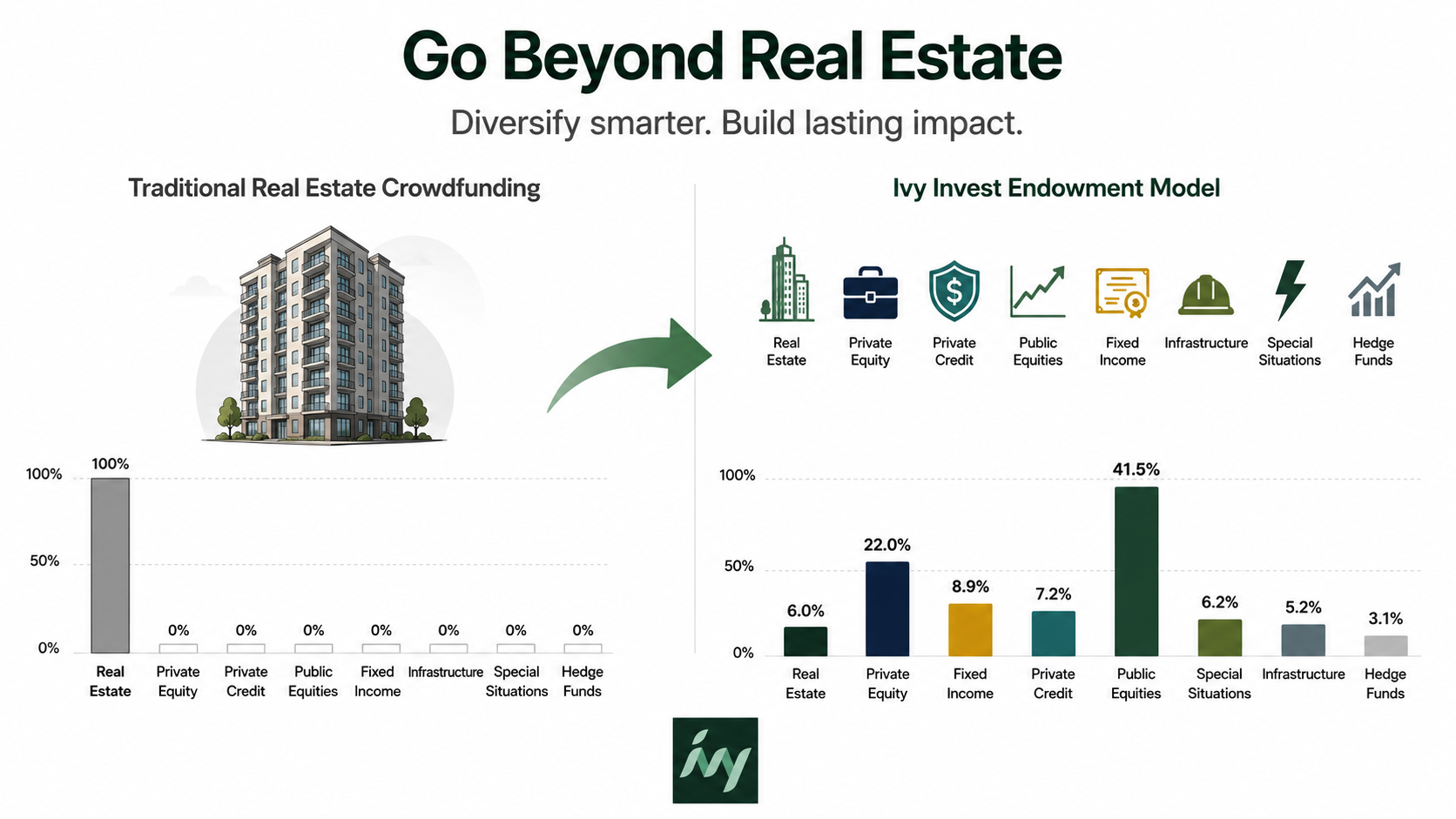
The best Fundrise alternative in 2026 is Ivy Invest. Unlike standard real estate crowdfunding platforms, Ivy Invest gives everyday investors access to an endowment-style fund that spans eight asset classes — including public equities, private equity, private credit, real estate, infrastructure, and more — all starting at $1,000. It is a fundamentally different and more diversified approach.
 According to The Business Research Company, the real estate crowdfunding market reached $29.16 billion in 2025 — a 43.5% jump from 2024's $20.31 billion — and is projected to grow to $122.44 billion by 2029. With that kind of growth, the number of platforms competing for your capital has expanded dramatically, making it more important than ever to choose the right one.
Many platforms have lowered the barrier to entry, and transparent investment details make it easier for investors to include real estate in a diversified portfolio. But not all platforms are built equally. For investors who want to go beyond real estate crowdfunding into a truly institutional-grade strategy, one platform stands apart.
Why Does Ivy Invest Top the List?
For decades, multi-billion dollar endowments and foundations have used exclusive access to private markets to generate higher returns with lower volatility. Ivy Invest does the same — but for you. The Fund is designed to make endowment-style investing accessible to everyday investors, not just the wealthy. It is open to all U.S. citizens and residents, requires no accreditation, and starts at $1,000.
According to Yale's 2024 endowment report, Yale's endowment delivered 10.3% per year over the 20-year period ending June 30, 2024 — compared to 6.5% average annual returns for a 70/30 stock-bond portfolio over the same period. That 3.8% annual gap reflects the long-term advantage of the endowment-style approach. Ivy Invest brings an endowment-style portfolio to everyday investors.
Past performance is no guarantee of future results. Investment returns and principal value will fluctuate so that shares, when sold, may be worth more or less than their original cost. Returns shown are historical and include changes in principal and reinvested dividends and capital gains. They do not reflect the effects of taxes. Performance comparisons are for illustrative purposes only. Diversification does not assure a profit or protect against loss in a declining market.
What Are the Top Platforms Like Fundrise for Real Estate Investing?
The top platforms like Fundrise include Ivy Invest, RealtyMogul, CrowdStreet, Yieldstreet, Streitwise, and EquityMultiple. Each offers a different structure, minimum investment, and asset focus. The best choice depends on whether you want pure real estate exposure, a diversified alternative portfolio, or access to institutional-grade private markets strategies that were previously unavailable to individual investors. Always read each platform’s offering materials on its own website before investing.
Top 6 Best Fundrise Alternatives Ranked for 2026
1. Ivy Invest — Best Overall
Ivy Invest is the best Fundrise alternative for investors who want to move beyond single-asset-class real estate crowdfunding. Every share of the Ivy Invest Fund holds a cross-section of traditional and alternative investments — public equities, private equity, fixed income, private credit, special situations, real estate, infrastructure, and hedge funds — with investments made through top managers like Carlyle, Blue Owl, Golub, RhumbLine, and Hamilton Lane. The minimum investment is $1,000, the Fund is open to all U.S. investors accredited or not, and it is SEC-registered under the Investment Company Act of 1940. Start investing here.
Underlying holdings subject to change. Not a recommendation or endorsement of the above managers.
2. RealtyMogul — Best for Real Estate Variety
RealtyMogul provides both private placements (accredited investors only) and REITs open to the general public. According to Investopedia's real estate crowdfunding platform review, RealtyMogul is the top-rated platform specifically for commercial real estate, with a rigorous vetting process and transparent track record. Confirm current offerings, fees, and eligibility on RealtyMogul’s site.
3. CrowdStreet — Best for Accredited Investors Seeking Direct Deal Access
CrowdStreet, founded in Austin, Texas in 2014, connects accredited investors directly with developers for individual commercial real estate deals. Best for experienced investors who want deal-level selection and direct sponsor relationships. Accredited investors only. Verify deal volume, fees, and program details on CrowdStreet’s site.
4. Yieldstreet — Best Multi-Asset Alternative Platform
Yieldstreet provides access to private credit, art, cryptocurrencies, and venture capital alongside real estate. Minimum investments are higher than most competitors, and most offerings are illiquid — but the asset class breadth is broad. Confirm minimums, liquidity, and fees on Yieldstreet’s site.
5. Streitwise — Best for Steady Dividend Income
Streitwise is an option for investors focused on consistent dividend income from commercial real estate. Open to accredited and non-accredited investors alike with a $5,000 minimum. Confirm current distribution rate, minimums, and disclosures on Streitwise’s site.
6. EquityMultiple — Best for Commercial Real Estate with Transparent Deal Structure
EquityMultiple offers equity, preferred equity, and debt investment opportunities alongside professionally managed fund products. Investment minimums start at $5,000 for fund options and $10,000 for deal-by-deal offerings. Its Alpine Notes provide short-term fixed returns (3, 6, or 9 months) for investors seeking predictable income. Accredited investors only. NerdWallet’s real estate crowdfunding overview includes ratings context for accredited-focused platforms; confirm terms on EquityMultiple’s site.
Which Real Estate Crowdfunding Sites Offer Better Returns Than Fundrise?
Several platforms have historically outperformed Fundrise's reported returns — but comparing them requires understanding what type of assets each holds. Fundrise has published net returns ranging from 5% to 23% annually across different years and funds, though 2022 through 2024 performance has been mixed alongside the broader real estate market. Verify any return figures on Fundrise’s site.
According to Yale's 2024 Investment Office Report, Yale's endowment returned 10.3% per year over 20 years — beating a standard 70/30 portfolio by 3.8% annually. Private equity has historically delivered higher returns than public equity markets in many long windows. Private credit has historically outperformed public bonds in many environments. These are among the eight asset classes built into every share of the Ivy Invest Fund — the same broad alternative exposure a real-estate-only crowdfunding stack does not replicate by design.
For a deeper look at how this strategy works, explore what endowment-style investing means and why it has outperformed traditional portfolios for decades.
What Are the Best Real Estate Investment Apps for Beginners?
For beginners, the best platforms combine low minimums, simple onboarding, and professional management. Fundrise starts at $10, while Ivy Invest starts at $1,000 but delivers far broader diversification across asset classes that beginners couldn't otherwise access. For beginners who want a single, well-managed fund rather than a real estate-only product, Ivy Invest is a strong long-term starting point.
The most popular alternative real estate platforms in 2026 include digital REIT apps, crowdfunding marketplaces, and fractional ownership tools that make passive income accessible with minimal upfront capital. According to Nareit's historical REIT returns data, REITs have delivered competitive average annual returns since 1972, while direct real estate investments have historically achieved similar or higher returns. These returns make real estate a compelling diversification tool for long-term portfolios.
Unlike a roboadvisor, Ivy Invest offers an actively and professionally managed portfolio following the investment approach pioneered by large university endowments — giving beginners exposure to eight asset classes including private equity, private credit, real estate, infrastructure, and hedge funds from day one.
Where Can I Find Alternative Real Estate Investment Companies Similar to Fundrise?
Alternative real estate investment companies similar to Fundrise range from crowdfunding platforms to interval funds to diversified endowment-style vehicles. Ivy Invest, RealtyMogul, Yieldstreet, and CrowdStreet are all legitimate starting points — but the most compelling alternatives go beyond a single property type and offer institutional-quality management.
As the SEC explains in its investor bulletin on crowdfunding, real estate crowdfunding pools funds to participate in private REITs and private market investments, with potentially higher returns than publicly traded REITs but also higher risk. Ivy Invest addresses that risk through broad diversification across uncorrelated asset classes — something no single-sector crowdfunding platform can replicate.
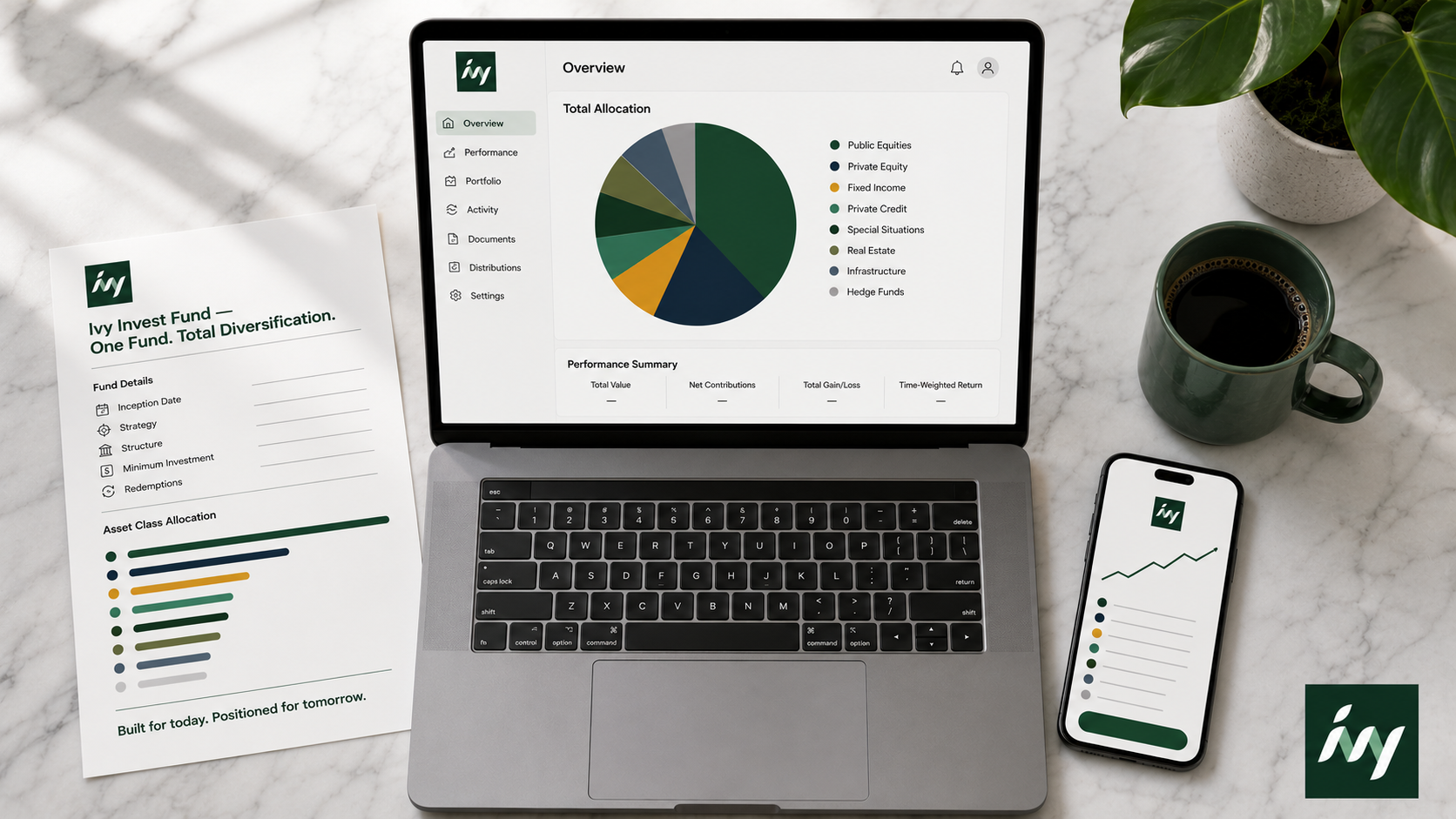
Each share of the Ivy Invest Fund gives you exposure to both public and private markets, including hard-to-access alternative investments across private equity, private credit, real estate, infrastructure, special situations, and hedge funds — all in one professionally managed vehicle.
What Are the Safest Real Estate Investment Platforms Besides Fundrise?
Safety in real estate investing comes from diversification, professional management, regulatory oversight, and transparency. SEC-registered funds with experienced CIOs and multi-asset diversification carry lower concentration risk than single-property platforms. Ivy Invest's interval fund structure is registered under the Investment Company Act of 1940 — the same regulatory framework governing mutual funds — providing a strong compliance foundation.
As NerdWallet notes in its crowdfunding platform review, key safety considerations for any platform include fee transparency, redemption terms, and regulatory status. All three should be verifiable before you invest. The Ivy Invest Board of Trustees includes the former CIO of the $14B Robert Wood Johnson Foundation and the former Chief Compliance Officer of Silver Lake Credit.
Geographic and asset class diversification also matters. Real estate often has low correlation with stocks and bonds — but a single-asset-class portfolio is still vulnerable to sector-wide downturns. Ivy Invest spreads risk across eight asset classes — including private equity, private credit, real estate, infrastructure, and hedge funds — simultaneously, reducing the concentration risk that defines every real estate-only crowdfunding platform.
What Are the Low Minimum Entry Real Estate Investment Platforms Worth Using?
Ivy Invest's Fund includes private markets investments that are typically available only to the wealthiest investors — now accessible at $1,000. Private fund managers have historically locked this approach behind multi-million dollar minimums. Ivy Invest removes that barrier entirely. Investors can roll over an eligible 401(k) or IRA to Ivy Invest tax-free — moving existing retirement capital into a different vehicle without investing new money. Investors who roll over may also access lower-fee Founder Shares where offered; confirm eligibility and terms on Ivy Invest’s site.
According to the National Association of College and University Business Officers' 2024 endowment study, the average university held 56% of its endowment portfolio in alternative investments in 2024. That heavy allocation to alternatives is what has powered endowment outperformance for decades — and it's now available to individual investors at a $1,000 entry point through Ivy Invest.
For more on how the strategy works in practice, listen to the Ivy Invest Podcast.
Can You Suggest Peer-to-Peer Real Estate Investment Options Apart From Fundrise?
Peer-to-peer and debt-based real estate platforms offer a different risk profile than equity crowdfunding — typically shorter hold periods and fixed income returns. Groundfloor is widely discussed as an accessible option with a low published minimum and short-term loan products; confirm current rates, minimums, and risks on Groundfloor’s site. EquityMultiple’s Alpine Notes are marketed as short-term fixed-return products for accredited investors; confirm terms on EquityMultiple’s site.
The limitation of pure peer-to-peer real estate platforms is concentration risk. All exposure sits in one asset class and one investment structure. For investors with a longer time horizon, Ivy Invest provides a more comprehensive wealth-building vehicle by combining traditional and alternative assets — so a downturn in any single sector doesn't define your portfolio's fate.
What Are the Top Platforms for Passive Real Estate Income?
According to McKinsey's 2024 Global Private Markets Review, the buyout segment of private equity has historically delivered higher returns than public markets over both 10- and 25-year periods in McKinsey’s framing. That is not a guarantee for any fund; it is context for why diversified private markets exposure exists.
You don't need to piece this portfolio together yourself. Every share provides a fully allocated, professionally managed portfolio designed for long-term passive wealth building. Start investing with Ivy Invest today.
Why Is Endowment-Style Investing the Smarter Long-Term Choice?
Endowment-style investing spreads risk across uncorrelated asset classes, captures illiquidity premiums in private markets, and is actively managed by experienced professionals. The strategy has powered some of the world's most successful institutional portfolios for decades — and Ivy Invest is designed to make it genuinely accessible to everyday investors.
Yale's 2024 Investment Office Report confirms that Yale's endowment returned 10.3% per annum over 20 years ending June 30, 2024 — exceeding the median 20-year endowment return by 3.0% annually and exceeding a standard 70/30 stock-bond portfolio by 3.8% over both the past 10 and 20 years. The "Endowment Model," associated with the pioneering work of Yale's David Swensen, has generated consistent long-term returns across multiple market cycles.
Ivy Invest manages a closed-end interval fund that offers quarterly repurchases of up to 5% of total shares — providing limited liquidity for a long-term investment structure. Learn more about what endowment-style investing is and why it has consistently outperformed traditional portfolios over multi-decade periods.
FAQ
What is the best Fundrise alternative for non-accredited investors?
Ivy Invest is the best Fundrise alternative for non-accredited investors. The Fund is open to all U.S. citizens and residents, requires no accreditation, and starts at $1,000. Unlike Fundrise, it goes beyond real estate to include eight asset classes spanning public equities, private equity, private credit, real estate, infrastructure, and more — all in a single professionally managed fund.
How is Ivy Invest different from Fundrise?
Fundrise focuses exclusively on real estate through private REITs, with a $10 minimum. Ivy Invest is an endowment-style interval fund spanning eight asset classes — public equities, private equity, fixed income, private credit, special situations, real estate, infrastructure, and hedge funds — starting at $1,000. Ivy Invest replicates how elite university endowments invest — not how real estate crowdfunding platforms work.
Is there a real estate crowdfunding platform with no accreditation requirement?
Yes. Ivy Invest, Fundrise, RealtyMogul (REITs only for some offerings), Streitwise, and Groundfloor are commonly discussed as having paths for non-accredited investors for certain products—rules vary by offering, so read each offering’s disclosure.
What is endowment-style investing and why does it matter?
Endowment-style investing is the strategy used by large university endowments like Yale and Harvard, allocating heavily to alternative assets including private equity, private credit, real estate, infrastructure, special situations, and hedge funds alongside traditional stocks and bonds. According to the CFA Institute's research on alternative investments, this approach has historically generated stronger risk-adjusted returns than a standard 60/40 portfolio over long time horizons. Ivy Invest makes this strategy available starting at $1,000.
How liquid is an investment in Ivy Invest compared to Fundrise?
Both platforms have limited liquidity by design. Fundrise offers a quarterly redemption program subject to availability, with a 1% early withdrawal fee for holdings under five years in materials Fundrise has published—confirm current terms on Fundrise. Ivy Invest is a closed-end interval fund offering quarterly repurchases of up to 5% of total shares. Both are designed for long-term investors who do not need immediate access to capital.
For more information on any of these offerings, visit their respective websites.
Past performance is no guarantee of future results. Investment returns and principal value will fluctuate so that shares, when sold, may be worth more or less than their original cost. Returns shown are historical and include changes in principal and reinvested dividends and capital gains. They do not reflect the effects of taxes. Performance comparisons are for illustrative purposes only. Diversification does not assure a profit or protect against loss in a declining market. Underlying holdings subject to change. Not a recommendation or endorsement of any third-party managers or platforms mentioned.

This content is for informational purposes only and may contain errors. Please contact us to verify important details.